Oral minoxidil side effects: what new studies and the tablet label report
In a multicentre safety study of low-dose minoxidil tablets for hair loss, which analysed 2,469 cases in 1,404 people, the most frequent side effect was extra hair on the face or body (15.1%); lightheadedness, fluid retention and a fast heartbeat were each under 2%. A 2026 study found new stomach or gut symptoms in 22 of 302 people. The tablet label lists five warning signals, among them a faster resting pulse, quick weight gain or swelling, and chest pain. Sources: [1]; [2]; minoxidil tablets label on DailyMed.
Prepared by Seoul Hair Loss editors. Published · Updated
Contents
What are the most common side effects of low-dose oral minoxidil?
Minoxidil tablets are a blood pressure medicine. Their label on DailyMed (revised May 2026, checked 2026-10-24) describes minoxidil as a peripheral vasodilator, a drug that widens small blood vessels, and gives 10 to 40 mg a day as the usual range for high blood pressure. Hair-loss studies use lower doses than that range[2], so the label’s percentages come from a different group of patients than the hair-loss studies below. Sources: DailyMed minoxidil tablets label.
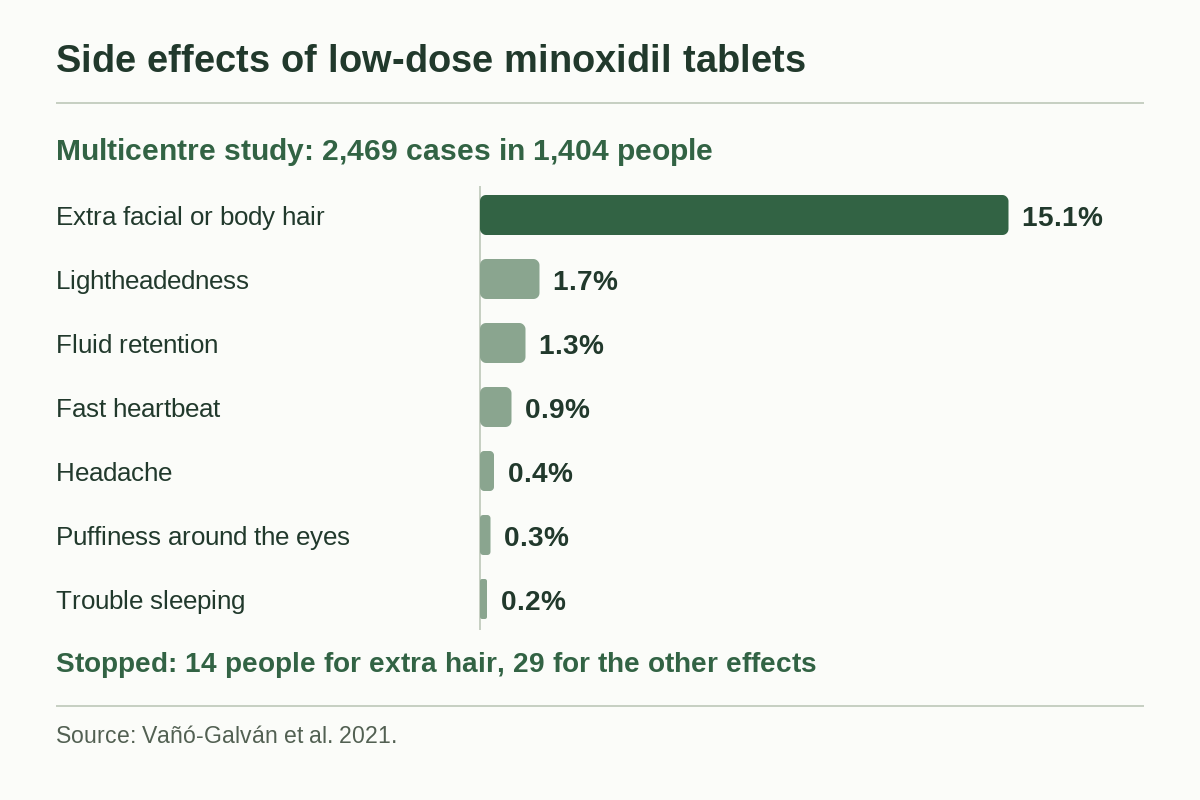
A safety study across several hair clinics looked back at 1,404 people who had taken low-dose tablets for at least three months; two-thirds were women. The dose was adjusted in 1,065 of them, which gave 2,469 cases to analyse. Extra hair growth on the face or body (hypertrichosis) was the most frequent effect, at 15.1%, and led 14 people to stop. Lightheadedness (1.7%), fluid retention (1.3%), a fast heartbeat (0.9%), headache (0.4%), puffiness around the eyes (0.3%) and trouble sleeping (0.2%) were less common and led 29 people to stop. No life-threatening effects were seen, and the study had no comparison group[1]. Dizziness and excess hair are also the two effects named in a Seoul overview of male pattern hair loss tablets.
Why does oral minoxidil cause extra hair on the face and body?
The tablet label, which describes people treated for high blood pressure, reports longer, thicker and darker fine body hair in about 80% of patients, appearing 3 to 6 weeks after starting. It is usually noticed first on the temples, between the eyebrows, between the hairline and the eyebrows, or on the upper cheek near the sideburns, and later on the back, arms, legs and scalp. After the tablets are stopped, new growth stops, but the label says it may take 1 to 6 months for the skin to look as it did before treatment. Sources: minoxidil label, adverse reactions.
Can oral minoxidil upset the stomach?
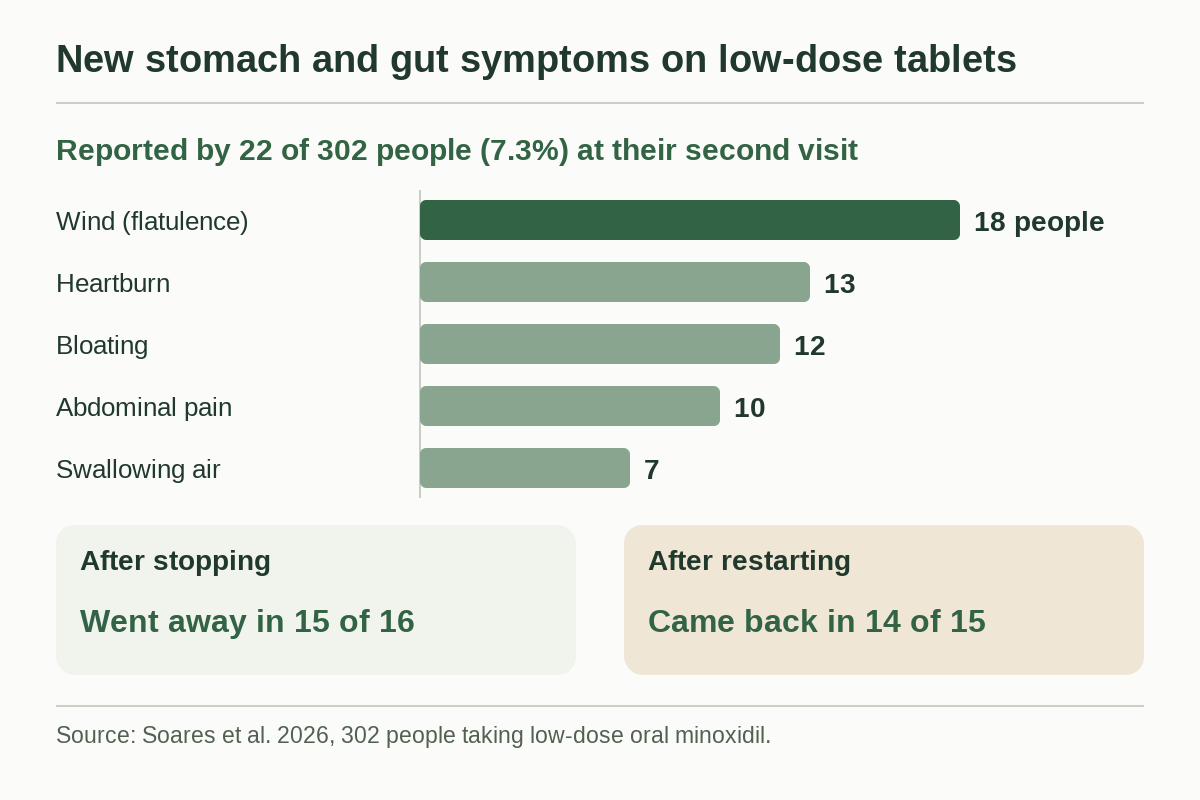
It can. A 2026 study at a hair clinic asked 302 people at their second visit after starting minoxidil tablets about new stomach and gut symptoms. Twenty-two (7.3%) reported them, most often wind, heartburn, bloating, abdominal pain and swallowing air. Symptoms went away after stopping in 15 of 16 people who stopped, and came back in 14 of 15 who restarted. They were more common in men (15.5%) than in women (4.1%), in people also taking other blood-vessel-widening medicines (25.6% against 4.6%), and at higher doses[2]. The tablet label also lists nausea and vomiting among its side effects (minoxidil label, gastrointestinal effects).
Can oral minoxidil affect the heart?
At blood pressure doses, the label warns that minoxidil raises the heart rate and makes the body hold on to salt and water. It reports fluid around the heart (pericardial effusion) in about 3% of treated patients who were not on dialysis, especially those with reduced kidney function, and reports of inflammation of the lining around the heart (pericarditis). Sources: minoxidil label, warnings.
Pericarditis at the low doses used for hair has seldom been reported. In 2026, doctors in New York described a 33-year-old man with no heart or kidney history who developed chest pain that changed with position and breathing, and shortness of breath, a month after restarting low-dose tablets on his own; he had taken the same dose for over two years without problems. He was diagnosed with pericarditis, the tablets were stopped, and his symptoms settled within 10 days of treatment. The authors found two earlier reports of pericarditis linked to low-dose tablets[3].
Which symptoms mean you should call a doctor right away?
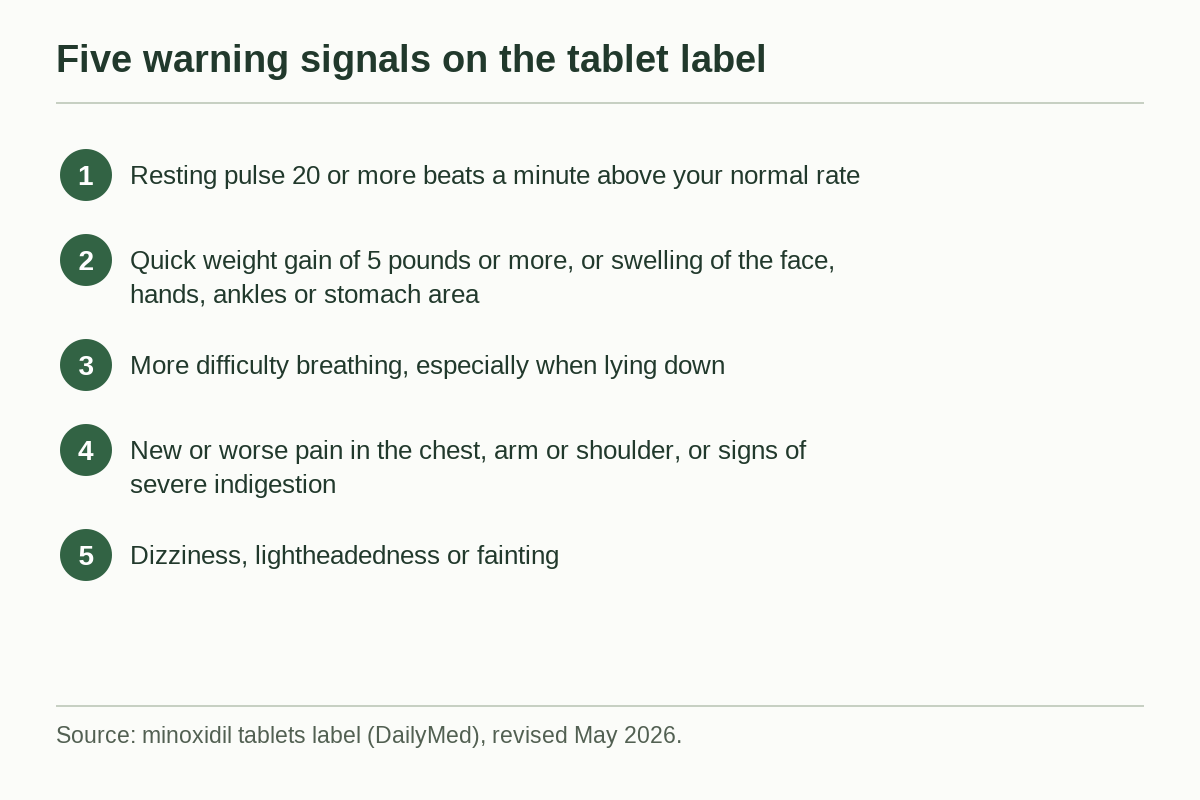
The patient section of the label lists five warning signals and says to call your doctor immediately if any of them occurs:
- A resting pulse 20 or more beats a minute above your normal rate.
- Quick weight gain of 5 pounds (about 2.3 kg) or more, or swelling or puffiness of the face, hands, ankles or stomach area.
- More difficulty breathing, especially when lying down.
- New or worse pain in the chest, arm or shoulder, or signs of severe indigestion.
- Dizziness, lightheadedness or fainting.
Source: minoxidil label, warning signals (checked 2026-10-24).
Who needs extra care with minoxidil tablets?
- Pregnancy: the label reports extra hair in newborns exposed to minoxidil during pregnancy.
- Breastfeeding: minoxidil was found in breast milk in one reported case, and the label says it should not be given to a nursing woman.
- Pheochromocytoma, a tumour of the adrenal gland: the label lists it as a contraindication.
- Kidney, heart or connective tissue disease: the label links fluid around the heart with reduced kidney function and, in many cases, with connective tissue disease, the uraemic syndrome, congestive heart failure or marked fluid retention.
- Other blood pressure medicines: gut symptoms were more common in people taking other vasodilators, and the label asks patients to make sure any doctor treating them knows they take minoxidil.
Sources: minoxidil label, precautions; [2]. For children under 12, a 2026 consensus of 50 clinicians from 9 countries listed fluid around the heart (pericardial effusion or tamponade) and pheochromocytoma as contraindications[4].
Do the side effects stop when you stop the tablets?
In the reports above, the effects eased after stopping. New body hair stops growing, although the label says the skin may take 1 to 6 months to look as before; gut symptoms went away in 15 of 16 people who stopped[2]; and the man with pericarditis recovered within 10 days of treatment[3].
Stopping or restarting on your own has its own problems. The label tells patients not to stop minoxidil without first talking to their doctor. In the 2026 case, the man had restarted without consulting his dermatologist or cardiologist, and the authors describe temporary shedding after stopping and restarting the tablets as a well-documented effect[3]. How the tablets compare with minoxidil on the scalp for regrowth is covered in hair loss medicines and their evidence.
How common are side effects of low-dose oral minoxidil?
Extra hair on the face or body is the most frequent. A multicentre study of low-dose tablets for hair loss, which analysed 2,469 cases in 1,404 people, recorded it at 15.1%; lightheadedness, fluid retention, a fast heartbeat, headache, puffiness around the eyes and trouble sleeping were each under 2%[1].
Does oral minoxidil cause weight gain?
It can cause fluid retention, which shows up as weight gain or swelling. A multicentre study of low-dose tablets for hair loss recorded fluid retention at 1.3%[1], and the label lists a quick gain of 5 pounds (about 2.3 kg) or more, or swelling of the face, hands, ankles or stomach area, as a warning signal.
Can oral minoxidil cause a fast heartbeat?
Yes. The label says minoxidil increases the heart rate, and a multicentre study of low-dose tablets for hair loss recorded a fast heartbeat at 0.9%[1]. A resting pulse 20 or more beats a minute above your normal rate is one of the label’s warning signals.
What should I tell a doctor in Seoul if I take minoxidil tablets?
Say that you take minoxidil, as the label asks patients to make sure any doctor treating or examining them knows. Bring the name and dose of every tablet you take, including any other blood pressure medicines, and mention any swelling, weight change, chest pain or dizziness since you started.
References (4)
Bibliographic records retrieved from PubMed (U.S. National Library of Medicine).
Oral minoxidil side effects: what new studies and the tablet label report
- Vañó-Galván S, Pirmez R, Hermosa-Gelbard A, et al. Safety of low-dose oral minoxidil for hair loss: A multicenter study of 1404 patients. J Am Acad Dermatol. 2021;84(6):1644-1651. PubMed: 33639244
- Soares J, Martínez-Sellés M, Soares RO. Gastrointestinal Side Effects of Low-Dose Oral Minoxidil in Patients with Alopecia: An Underrecognized Association. Dermatol Pract Concept. 2026;16(3):7007. PubMed: 42858418
Can oral minoxidil affect the heart?
- Zappi I, Spindler A, Maas D, et al. Pain in the heart, hair on the head: Pericarditis as an unanticipated risk of low-dose oral minoxidil. JAAD Case Rep. 2026;76:48-53. PubMed: 42701670
Who needs extra care with minoxidil tablets?
- Akiska YM, Fu J, Castelo-Soccio L, et al. Low-Dose Oral Minoxidil Use for Pediatric Hair Disorders: An International Consensus Statement. JAMA Dermatol. 2026 Sep 30 (online ahead of print). PubMed: 42814435