Rosemary oil for hair loss: the one trial against minoxidil, and how a 2025 consensus rated it
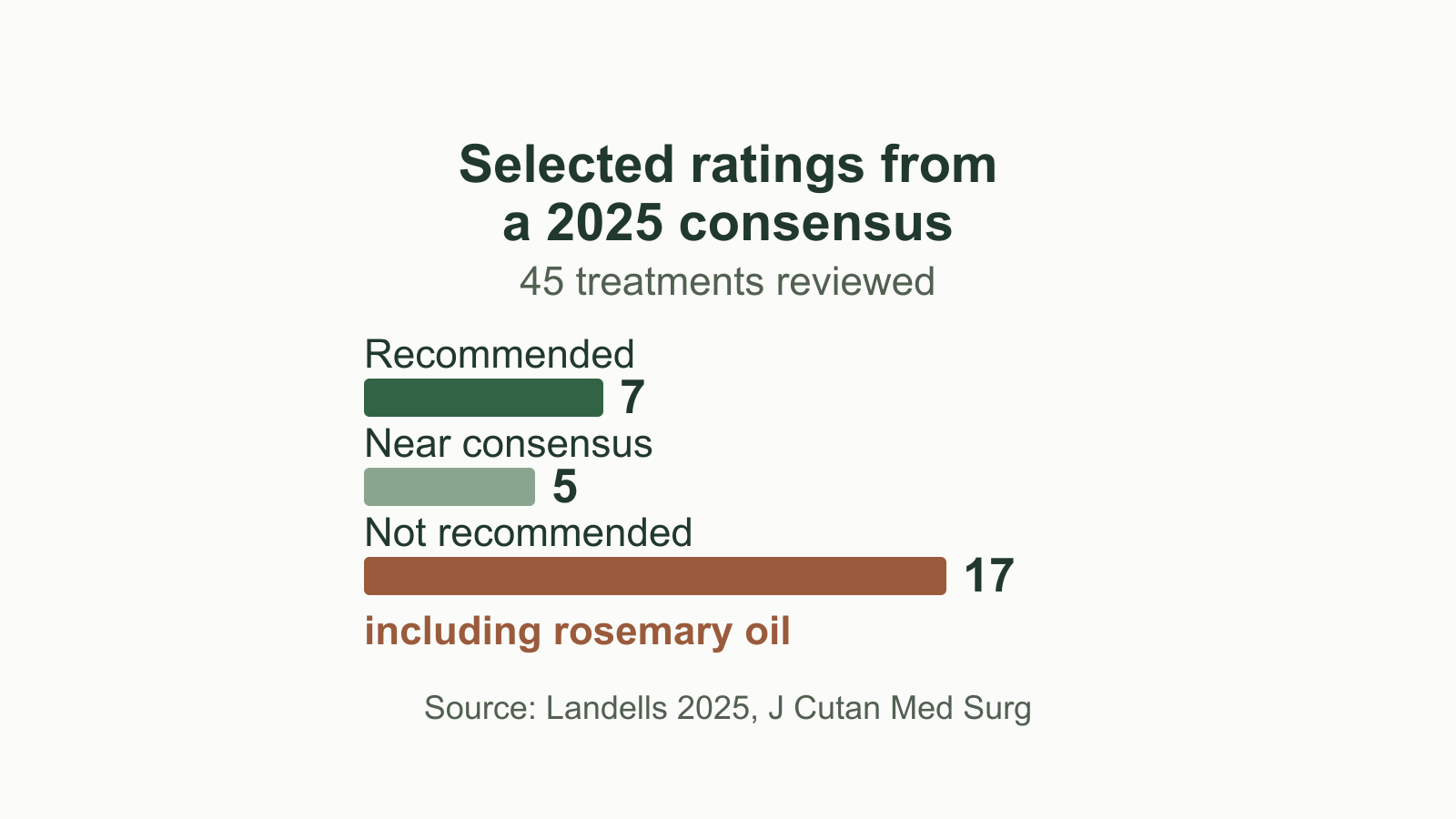
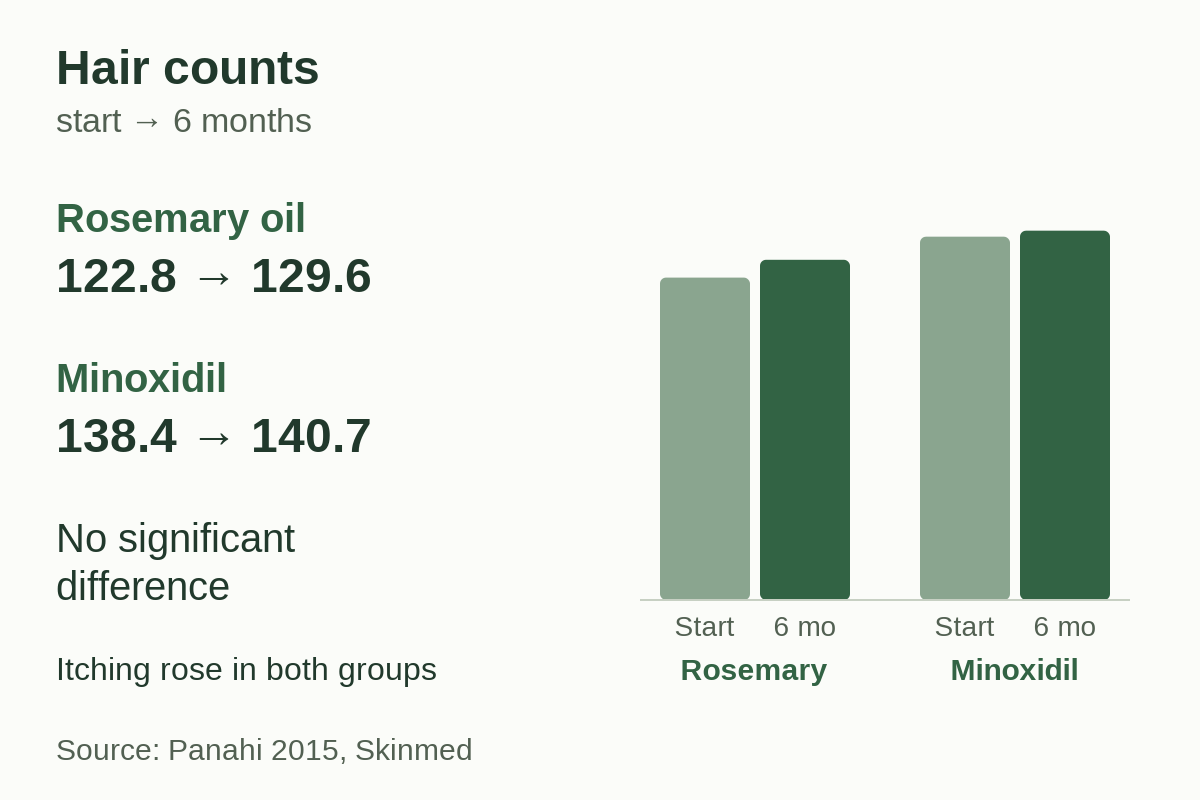
The main human evidence for rosemary oil in pattern hair loss is one randomised trial. In 100 men, hair counts rose after six months with rosemary oil and with 2% minoxidil, with no statistically significant difference between the groups, and scalp itching increased in both groups.[1] A 2025 Canadian expert consensus reviewed 45 hair loss treatments and placed rosemary oil among the 17 it did not recommend.[2]
Prepared by Seoul Hair Loss editors. Published · Updated
Contents
What did the rosemary oil trial measure?
Reviews of rosemary oil for hair loss rest on the same human study, a 2015 randomised trial from Tehran. Men aged 18 to 49 with androgenetic alopecia were randomly assigned to rosemary oil (50) or 2% minoxidil (50) for six months, with standardised scalp photographs at the start, at three months and at six months. At three months, mean hair count had not changed significantly in either group. At six months, both groups had significantly more hairs than at the start and at three months: from 122.8 to 129.6 with rosemary oil and from 138.4 to 140.7 with 2% minoxidil. The groups did not differ significantly at either point.[1]
A 2025 review noted that the size and location of the counted area were not reported. It found this to be the only rosemary oil trial among 13 investigator-blinded trials of non-prescription products, and concluded that none of the products was shown to work better than topical minoxidil or oral finasteride.[3]
Why compare rosemary oil with 2% minoxidil?
The trial used the 2% strength. Men’s over-the-counter minoxidil in the US is also sold at 5%, as on the Drug Facts label of Rogaine Extra Strength (DailyMed, checked 1 November 2026), and no rosemary oil trial in the 2025 review compared it with that strength or with finasteride.[3] One six-month trial found no statistically significant difference in hair counts between rosemary oil and 2% minoxidil. Equal effectiveness remains uncertain.[1]
How did a 2025 consensus rate rosemary oil?
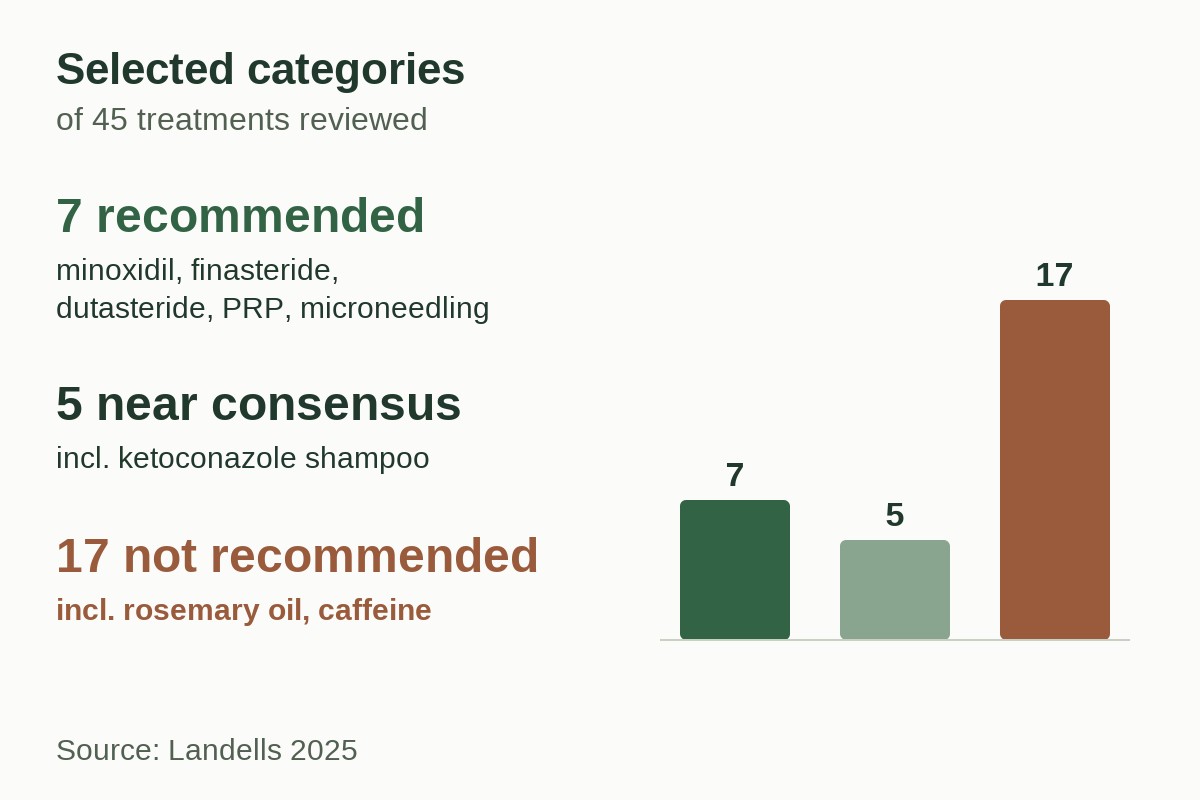
A Canadian panel of 11 physicians used a Delphi process to rate 45 treatments for pattern hair loss in adults. Seven were recommended: oral dutasteride, oral and topical finasteride, topical and oral minoxidil, platelet-rich plasma and microneedling. Five were recommended with near consensus, among them ketoconazole shampoo and low-level laser. Seventeen were not recommended, among them rosemary oil, caffeine, topical herbal formulations and piroctone olamine shampoo. Four of the authors work for L’Oréal Canada.[2]
How might rosemary act on hair follicles?
Rosemary contains antioxidant, anti-inflammatory and antimicrobial compounds. In an animal study cited by two reviews, a rosemary leaf extract blocked 5-alpha-reductase, the enzyme that turns testosterone into the dihydrotestosterone that shrinks follicles in pattern hair loss, and 12-methoxycarnosic acid was the most active compound.[3][4] How that hormone works in pattern hair loss, and the medicines that lower it, are set out in hair loss medicines.
Does rosemary oil have side effects on the scalp?
Where does rosemary oil fit, then?
The trial included only men with pattern hair loss; it did not test women, sudden shedding or patchy loss. Knowing which type of hair loss you have and the treatments that follow from it comes first; the types are compared in types of hair loss.
Does rosemary oil regrow hair?
Is rosemary oil as good as minoxidil?
How long does rosemary oil take to work?
In the 2015 trial, hair counts had not changed at three months and had risen by six months, in both the rosemary oil and the minoxidil groups.[1]
References (4)
Bibliographic records retrieved from PubMed (U.S. National Library of Medicine).
Rosemary oil for hair loss: the one trial against minoxidil, and how a 2025 consensus rated it
- Panahi Y, Taghizadeh M, Marzony ET, et al. Rosemary oil vs minoxidil 2% for the treatment of androgenetic alopecia: a randomized comparative trial. Skinmed. 2015;13(1):15-21. PubMed: 25842469
- Landells I, Chow E, Gupta AK, et al. A Canadian Consensus on Androgenetic Alopecia: Approach and Management. J Cutan Med Surg. 2025;29(5 suppl):5S-14S. PubMed: 40986632
What did the rosemary oil trial measure?
- Gupta AK, Wang H, Wang T, et al. Do Non-Prescription Products Help in Managing Androgenic Alopecia? Skin Appendage Disord. 2025;11(3):270-281. PubMed: 40475103
How might rosemary act on hair follicles?
- Bin Rubaian NF, Alzamami HFA, Amir BA. An Overview of Commonly Used Natural Alternatives for the Treatment of Androgenetic Alopecia, with Special Emphasis on Rosemary Oil. Clin Cosmet Investig Dermatol. 2024;17:2495-2503. PubMed: 39524109